Timing Belt
Replacement In Walnut Creek
Protect Your Engine With Professional Timing Belt Replacement & Repair
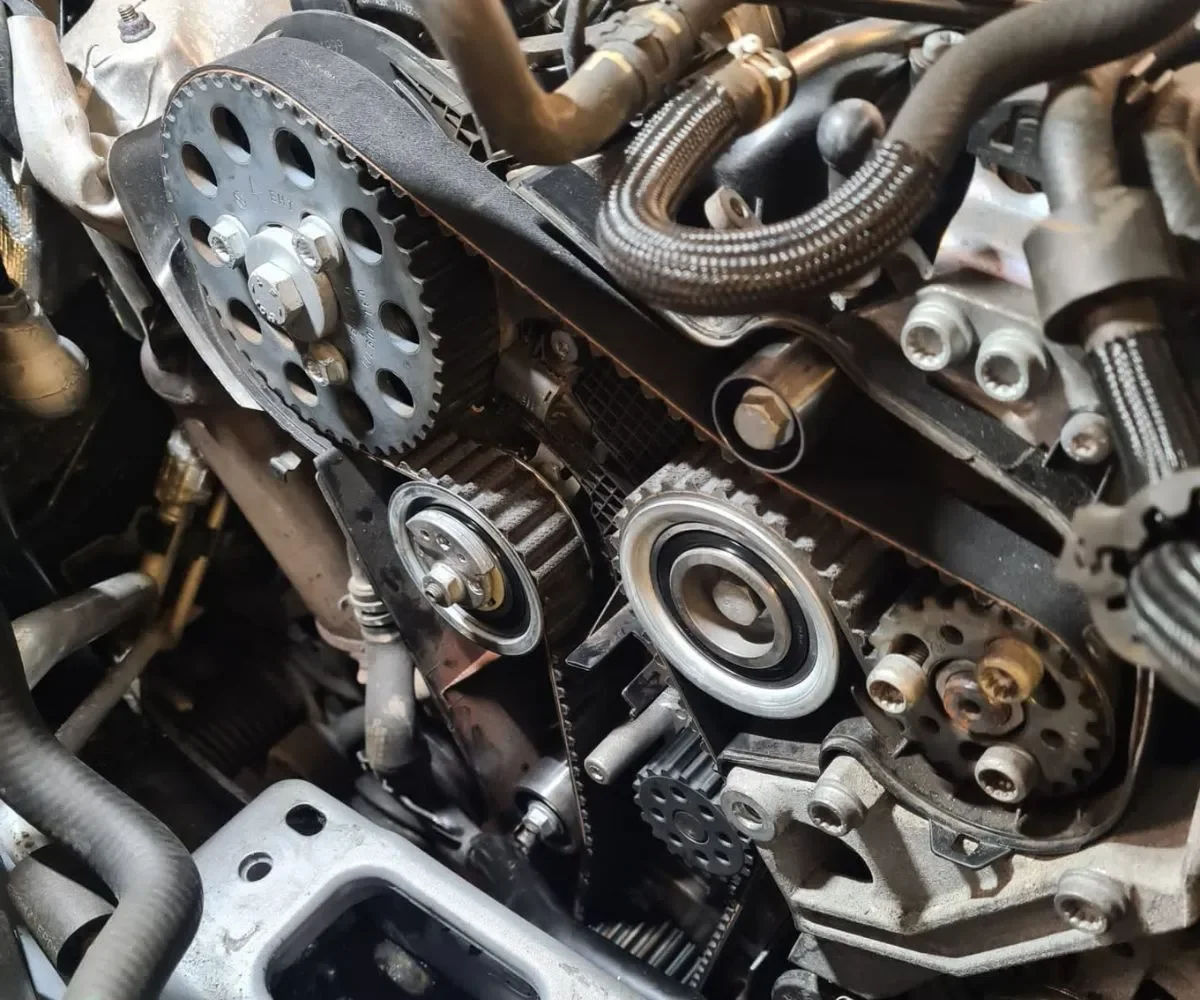
When a timing belt starts to fail it can be a catastrophic event for your engine. Because the timing belt synchronizes the crankshaft and camshaft, a malfunction throws the entire engine's rhythm out of whack.
-
Your vehicle's timing belt is a critical engine component that synchronizes the rotation of the crankshaft and camshaft, ensuring your engine's valves and pistons move in perfect timing. This precise coordination allows your engine to run smoothly, efficiently, and reliably. Over time, timing belts naturally wear due to heat, age, and mileage, making routine Timing Belt Service an essential part of your vehicle's maintenance schedule.
Delaying Timing Belt Replacement can lead to serious engine damage, especially in interference engines where a broken timing belt can cause valves and pistons to collide. Replacing your timing belt at the manufacturer-recommended interval helps protect your engine, avoid costly repairs, and keep your vehicle performing at its best. If you notice unusual engine noises, difficulty starting, or your vehicle has reached its recommended service interval, it may be time for a professional inspection or Timing Belt Repair.
At Walnut Creek Brake & Tire, our experienced technicians provide expert Timing Belt Replacement, inspection, and repair services for most domestic and Asian vehicles, including Honda, Toyota, Lexus, Subaru, Acura, Nissan, Hyundai, Kia, Mazda, Ford, Chevrolet, and more. Proudly serving drivers throughout Walnut Creek and Contra Costa County, we're committed to helping you protect your investment with honest recommendations, quality workmanship, and dependable automotive care. text goes here
Warning Signs of a Failing Timing Belt:
Squeling or Ticking Noise
Oil Leaking from Timing Cover
Engine Misfires
Visible Cracks of Wear
Difficulty Starting
Manufacturer Mileage Interval

Timing Belt Replacement:
Frequently Asked Questions
Have A Question?
-
Most timing belts should be replaced every 60,000 to 100,000 miles, depending on your vehicle's manufacturer and engine design. Some newer vehicles have longer service intervals, while others require replacement sooner. Following your manufacturer's recommended maintenance schedule is the best way to avoid unexpected timing belt failure and costly engine repairs. If you're unsure, Walnut Creek Brake & Tire can inspect your vehicle and recommend the proper replacement interval.
-
Driving with a worn timing belt is not recommended because it can fail without warning. A damaged timing belt may cause poor engine performance, rough idling, or unusual noises before breaking completely. On many vehicles, a broken timing belt can result in severe engine damage, including bent valves and damaged pistons. Replacing the belt before it fails is significantly less expensive than repairing engine damage afterward.
-
While replacing the water pump is not always required, it is highly recommended during a timing belt replacement. The water pump is often located behind the timing belt, meaning the same labor is required to access both components. Replacing them together helps prevent future breakdowns and avoids paying for duplicate labor if the water pump fails later.
-
Most timing belt replacement services take between 3 and 6 hours, depending on your vehicle's make, model, and engine configuration. Some engines require more extensive disassembly, which can increase labor time. Your technician can provide a more accurate estimate based on your specific vehicle and any additional components being replaced.
-
Timing belt replacement is a significant maintenance service, but it is far less expensive than repairing engine damage caused by a broken belt. The total cost depends on your vehicle, engine design, and whether related components such as the water pump, tensioners, or seals are replaced at the same time. Preventive replacement is one of the smartest investments you can make in your vehicle's long-term reliability.
-
Many Honda, Toyota, Acura, Subaru, Lexus, Hyundai, Kia, Mazda, Mitsubishi, and several domestic vehicles use timing belts instead of timing chains. Because manufacturers use different engine designs, two vehicles from the same brand may have different timing systems. Checking your owner's manual or consulting a qualified technician is the easiest way to determine which system your vehicle uses.
-
Some modern timing belts are designed to last more than 100,000 miles, but their lifespan depends on driving conditions, engine design, climate, and maintenance history. Even if the belt appears to be in good condition, manufacturers recommend replacement based on mileage or age because rubber components naturally deteriorate over time.
-
A broken timing belt can cause severe engine damage on vehicles equipped with interference engines. When the belt breaks, the camshaft stops turning while the crankshaft continues moving, allowing valves and pistons to collide. This can bend valves, damage pistons, and require expensive engine repairs. Replacing the timing belt before it fails helps avoid these costly problems.
-
Replacing a timing belt is a complex repair that requires specialized tools, manufacturer specifications, and precise engine timing. Even a small installation error can cause poor engine performance or internal engine damage. Unless you have advanced mechanical experience, timing belt replacement is best performed by a qualified automotive technician.
-
Neither system is inherently better—they are simply designed differently. Timing chains are made of metal and generally last longer but can be more expensive to repair if they wear out. Timing belts are quieter and less expensive to manufacture but require periodic replacement as part of scheduled maintenance. The most important factor is following your vehicle manufacturer's recommended service schedule for whichever system your engine uses.
It’s important to us that our customers know exactly what we’re going to do with their vehicle. Here’s what you can expect from Walnut Creek Brake and Tire when you bring your vehicle in for a Timing Belt Replacement.
Timing Belt Replacement
Inspect the timing belt system and confirm replacement is needed based on mileage, wear, or manufacturer recommendations.
Vehicle Inspection

Remove necessary engine accessories and timing covers to safely access the timing belt assembly.
Access The Timing Belt


Replace Timing Belt
Remove the old timing belt and install a new belt according to manufacturer specifications.
Replace Tensioners

Install new tensioners and idler pulleys to ensure proper belt tension and long-term reliability.
Install a new water pump while the timing belt is accessible to help prevent future repairs and duplicate labor costs.
Replace Water Pump

Reinstall timing covers, accessories, and all removed components to restore the engine to its original condition.
Reassemble Engine

Carefully align and confirm camshaft and crankshaft timing to ensure proper engine operation.
Verify Engine Timing

Perform a road test and final inspection to verify smooth performance and ensure repair meets our standards.
Final Testing

Vehicles We Service
Identifying a timing belt issue early can save time, money, and prevent additional damage. Some of the vehicles we service are:
Honda
Toyota
Lexus
Subaru
Acura
Nissan
Hyundai
Kia
Mazda
Audi
BMW
Mercedes
Porsche
VW
Ford
Lincoln
Chevrolet
GMC
Cadillac
Buick
Dodge
Jeep
Chrysler
Tesla
Rivian
Polestar
Why Choose Walnut Creek Brake & Tire
Walnut Creek Brake & Tire is committed to providing honest, high-quality automotive care backed by experienced technicians and exceptional customer service.
ASE Certified Techs
Our ASE Certified technicians have the training and experience to accurately inspect, diagnose, and replace timing belts on a wide range of domestic and Asian vehicles.
Honest Recommendations
We believe in earning your trust through honesty and integrity. If your timing belt doesn't need replacement yet, we'll tell you. If we identify related maintenance that can help prevent future repairs, we'll explain your options clearly—without high-pressure sales tactics.
Quality Replacement Parts
We install high-quality timing belts, tensioners, idler pulleys, and related components that meet or exceed original equipment (OE) standards. Using reliable parts helps maximize engine performance, longevity, and peace of mind.
Backed By Warranty
We stand behind the quality of our workmanship and the parts we install. Our warranty provides added confidence that your timing belt replacement is protected long after you leave our shop.
Convenient In Walnut Creek
Located in the heart of Walnut Creek, our shop makes it easy for drivers from Pleasant Hill, Lafayette, Concord, Alamo, and throughout Contra Costa County to access trusted automotive repair close to home.
Family Owned
As a family-owned business, we treat every customer like a neighbor. Our goal is to build long-term relationships by providing reliable repairs, fair pricing, and personalized service that keeps your vehicle safe and dependable for years to come.
Learn More About Our Automotive Services: